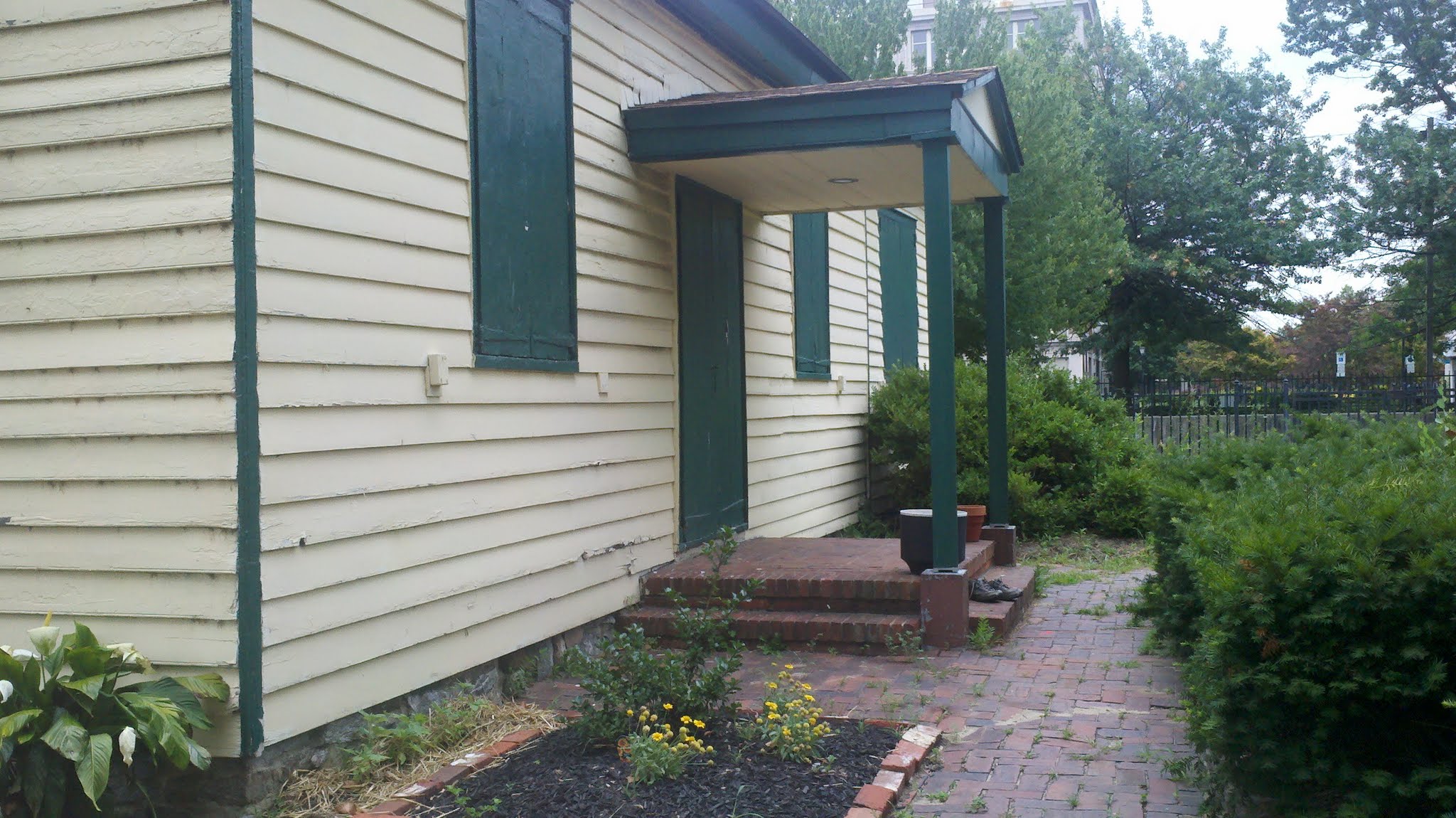
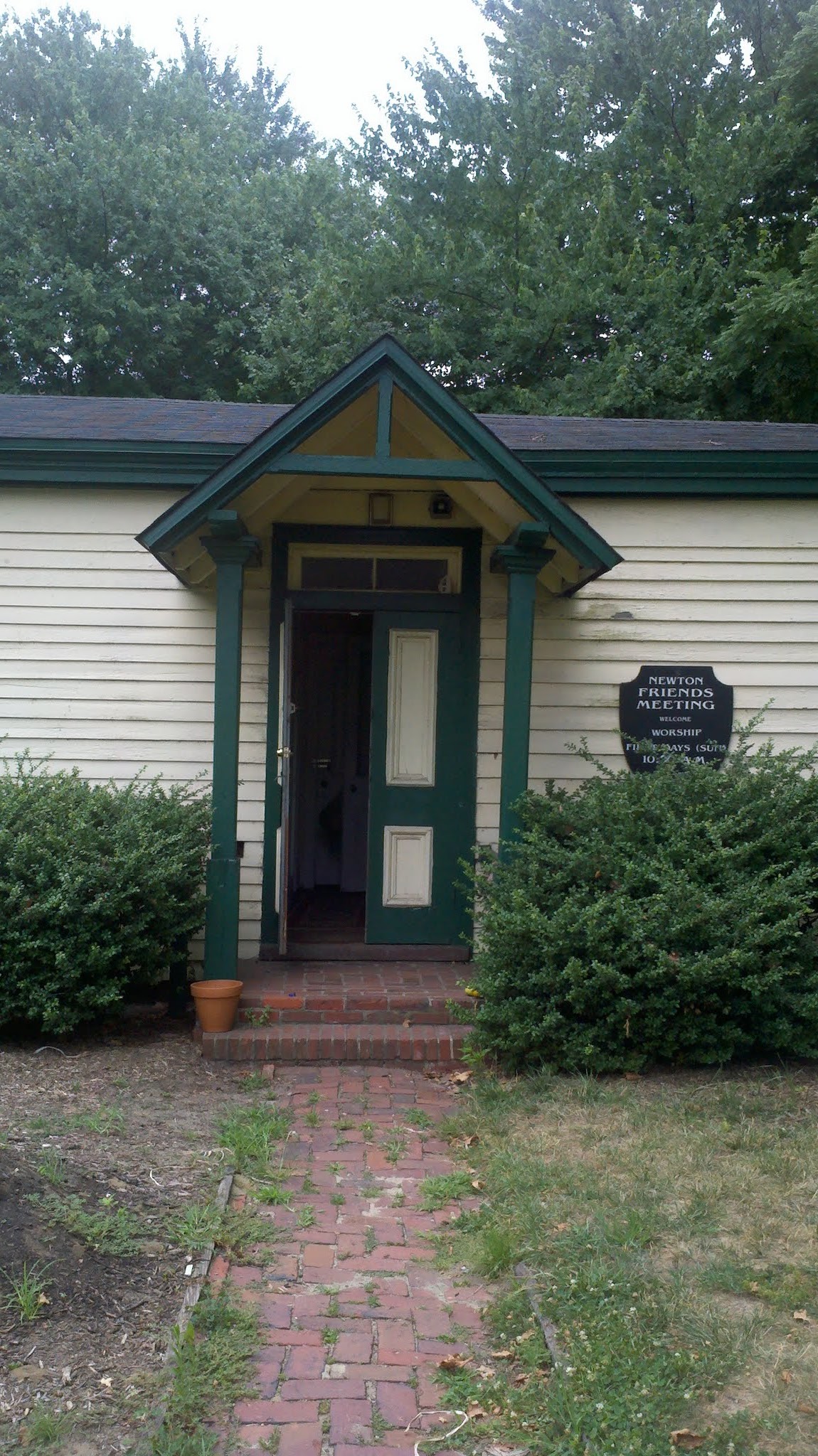
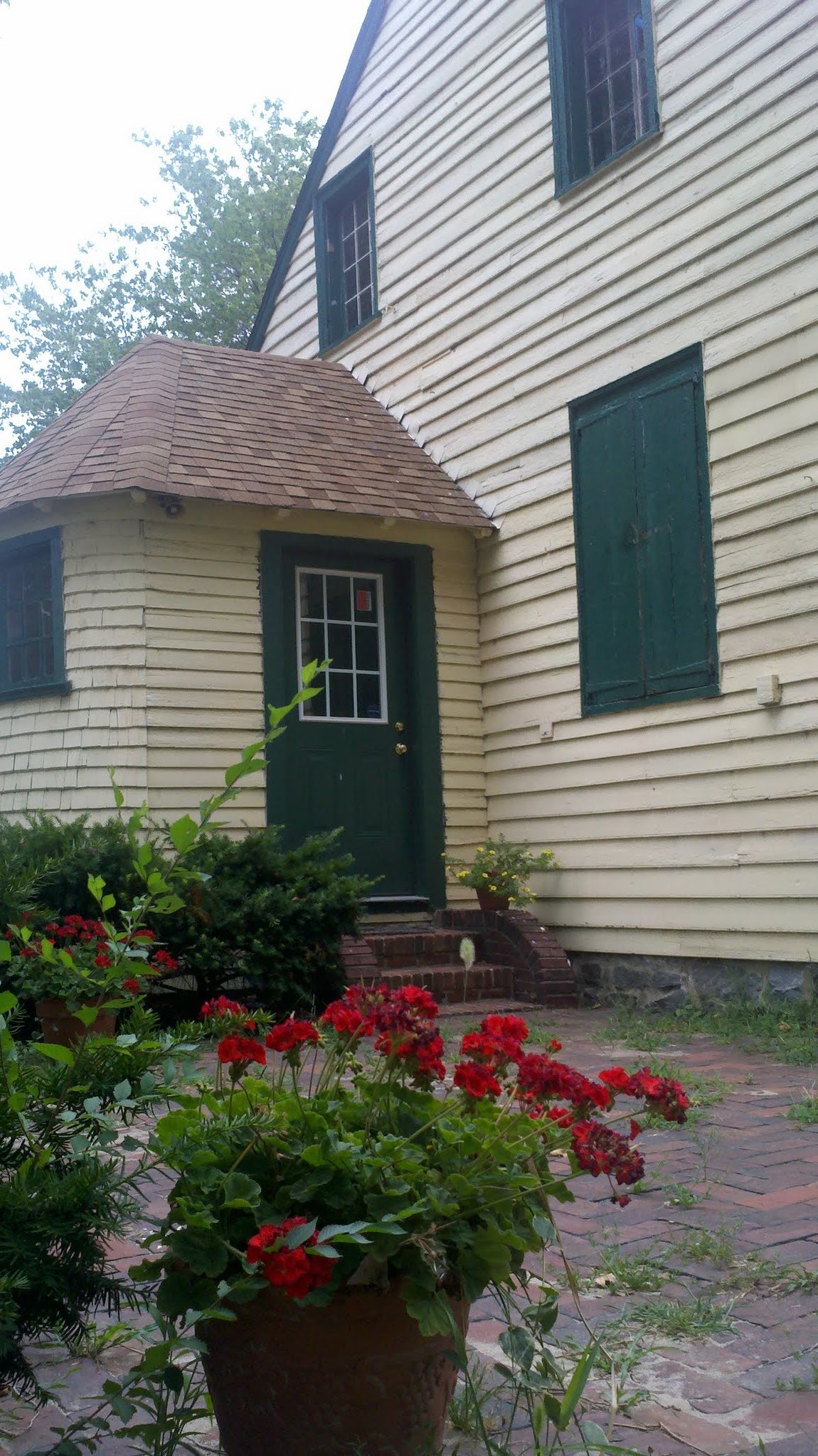
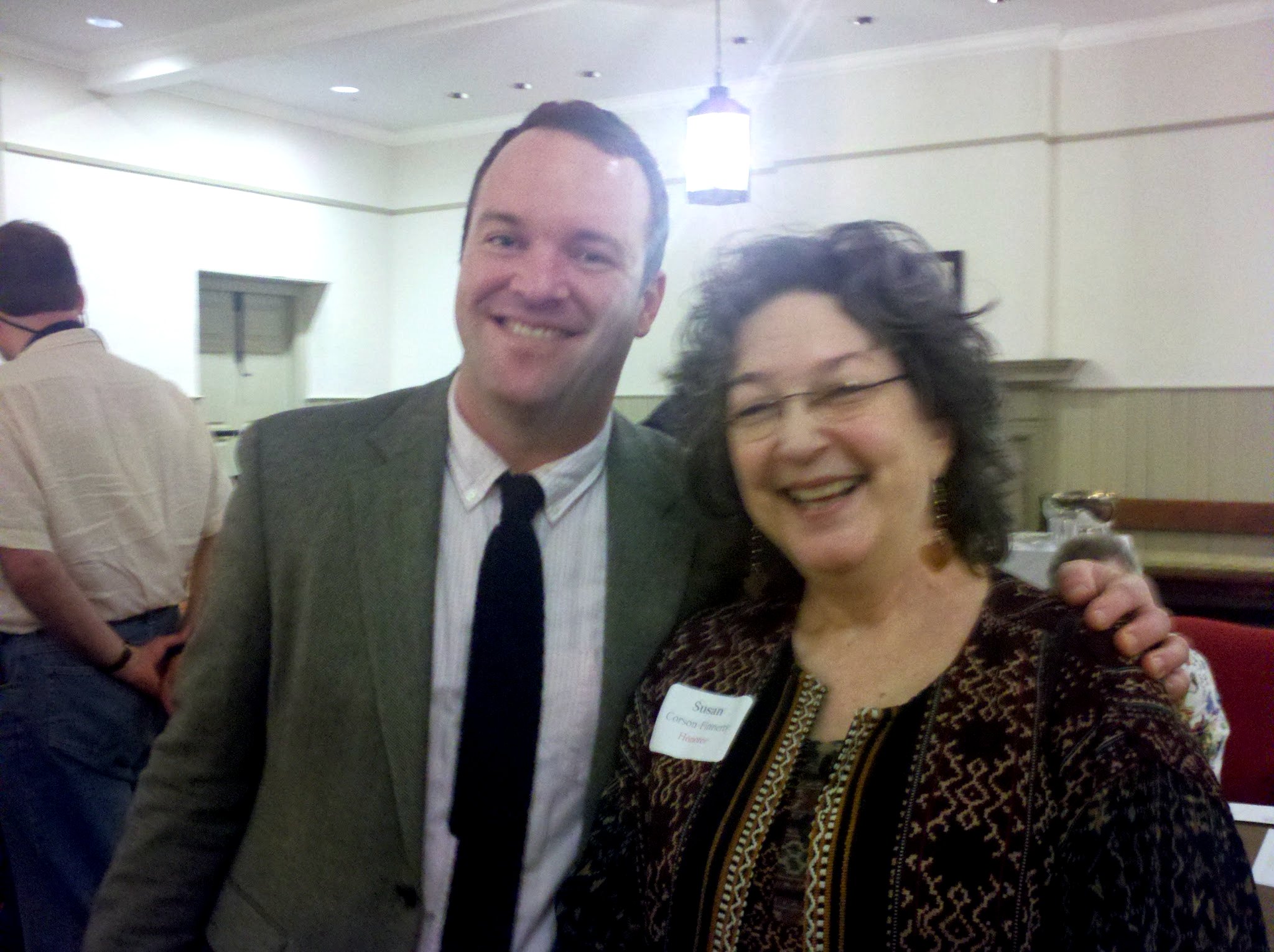
A few grainy pics from Saturday’s retirement party for Friends Journal’s Susan Corson-Finnerty and Bob Dockhorn.
In album Friends Journal dinner Oct 1, 2011 (5 photos)



Google+: View post on Google+
A few grainy pics from Saturday’s retirement party for Friends Journal’s Susan Corson-Finnerty and Bob Dockhorn.
In album Friends Journal dinner Oct 1, 2011 (5 photos)
Google+: View post on Google+
One of the things that is intriguing me lately is the nature of Quaker debate. There are half a dozen seemingly-perennial political issues around which Friends in my circles have very strong opinions (these include abortion, nuclear power, and the role of Friends in the troubles of Israel/Palestine) . We often justify our positions with appeals to our Quaker faith, but I wonder how often our opinions could be more accurately predicted by our demographic profile?

How many of your political positions and social attitudes could be accurately guessed by a savvy demographer who knew your date of birth, postal code, education and family income? I’d guess each of us are far more predictable than we’d like to think.If true, then what role does our religious life actually play?
Religious beliefs are also a demographic category, granted, but if they only confirm positions that could be just as actually predicted by non-spiritual data, then doesn’t that imply that we’ve simply found (or remained in) a religious community that confirms our pre-existing biases? Have we created a faith in our own image? And if true, is it really fair to justify ourselves based on appeals to Quaker values?
The “political” Quaker writings I’m finding most interesting (because they’re least predictable) are the ones that stop to ask how Quaker discernment fits into the debate. Discernment: one could easily argue that Quaker openings and tools around it are one of our greatest gifts to human spirituality. When we build a worship community based on strict adherence to the immediate prompting of the Holy Spirit, the first question becomes figuring out what is of-God and what is not. Is James Nayler, riding Jesus-like into Bristol, a prophet or a nut?
When we go deep into the questions, we may find that the answers are less important than the care we take to reach them. Waiting for one another, holding one another’s hand in love despite differences of opinion, can be more important than being the right-answer early adopter. How do you step back from easy answers to the thorny questions? How do you poll yourself and that-of-God in yourself to open your eyes and ears for the potential of surprise?
People sometimes get pretty worked up about convincing each other of an matter of pressing importance. We think we have The Answer about The Issue and that if we just repeat ourselves loud enough and often enough the obviousness of our position will win out. It becomes our duty, in fact, to repeat it loud and often. If we happen to wear down the opposition so much that they withdraw from our companionship or fellowship, all the better, as we’ve achieved a patina of unity. Religious liberals are just as prone to this as the conservatives.
These are not the values we hold when talking about the natural world. There we talk about biodiversity. We don’t cheer when a species maladapted to the human-driven Anthropocene disappears into extinction. Just because a plant or animal from the other side of the world has no natural predators doesn’t mean our local species should be superseded.
Scientists tell us that biodiversity is not just a kind of do-unto-others value that satisfies our sense of nostalgia; having wide gene pools comes in handy when near-instant adaptation is needed in response to massive habitat stress. Monocrops are good for the annual harvest but leave us especially vulnerable when phytophthora infestans comes ashore.
It’s a good thing for different religious groups to have different values, both from us us and from one another. There are pressures in today’s culture to level all of our distinctives down so that we have no unique identity. Some cheer this monocropping of spirituality, but I’m not sure it’s healthy for human race. If our religious values are somehow truer or more valuable than those of other people, then they will eventually spread themselves – not by pushing other bodies to be like us, but by attracting the members of the other bodies to join with us.
God may have purpose in fellowships that act differently that ours. Let us not get too smug about our own inevitability that we forget to share ourselves with those with whom we differ.
I’m officially a jaded commuter: second day in a row I looked up to realize I hadn’t noticed Delaware River bridge crossing.
Google+: View post on Google+
The coolest part of visits to my optometrist’s office is the vintage 1960’s equipment that they still use.

Google+: View post on Google+