I really should blog here more. I really should. I spend a lot of my time these days sharing other people’s ideas. Most recently, on Friends Journal you can see my interview with Jon Watts (co-conducted with Megan Kietzman-Nicklin). The three of us talked on and on for quite some time; it was only an inflexible train schedule that ended my participation.
The favorite part of talking with Jon is his enthusiasm and his talent for keeping his sights set on the long picture (my favorite question was asking why he started with a Quaker figure so obscure even I had to look him up). It’s easy to get caught up in the bustle of deadlines and to-do lists and to start to forget why we’re doing this work as professional Quakers. There is a reality behind the word counts. As Friends, we are sharing the good news of 350+ years of spiritual adventuring: observations, struggles, and imperfect-but-genuine attempts to follow Inward Light of the Gospels.
My nine year old son Theo is blogging as a class assignment. I think they’ve been supposed to be writing there for awhile but he’s really only gotten the bug in the last few weeks. It’s a full-on WordPress site, but with certain restrictions (most notably, posts only become public after the classroom teacher has had a chance to review and vet them). It’s certain ironic to see one of my kids blogging more than me!
Enough blogging for today. Time to put the rest of the awake kids to bed. I’m going to try to have more regular small posts so as to get back into the blogging habit. In the meantime, I’m always active on my Tumblr site (which shows up as the sidebar to the right). It’s the bucket for my internet curations – videos and links I find interesting, and my own pictures and miscellanea.
To translate, SEO is “search engine optimization,” the often-huckersterish art of tricking Google to display your website higher than your competitors in search results. “Usability” is the catch-all term for making your website easy to navigate and inviting to visitors. Companies with deep pockets often want to spend a lot of money on SEO, when most of the time the most viable long-term solution to ranking high with search engines is to provide visitors with good reasons to visit your site. What if we applied these principles to our churches and meetinghouses and swapped the terms?
Outreach gets people to your meetinghouse / Hospitality keeps people returning.
A lot of Quaker meetinghouses have pretty good “natural SEO.” Here in the U.S. East Coast, they’re often near a major road in the middle of town. If they’re lucky there are a few historical markers of notable Quakers and if they are really lucky there’s a highly-respected Friends school nearby. All these meetings really have to do is put a nice sign out front and table a few town events every year. The rest is covered. Although we do get the occasional “aren’t you all Amish?” comments, we have a much wider reputation that our numbers would necessarily warrant. We rank pretty high.
But what are the lessons of hospitality we could work on? Do we provide places where spiritual seekers can both grow personally and engage in the important questions of the faith in the modern world? Are we invitational, bringing people into our homes and into our lives for shared meals and conversations?
In my freelance days when I was hired to work on SEO I ran through a series of statistical reports and redesigned some underperforming pages, but then turned my attention to the client’s content. It was in this realm that my greatest quantifiable successes occurred. At the heart of the content work was asking how could the site could more fully engage with first-time visitors. The “usability considerations” on the Wikipedia page on usability could be easily adapted as queries:
Who are the users, what do they know, what can they learn? What do users want or need to do? What is the users’ general background? What is the users’ context for working? What must be left to the machine? Can users easily accomplish intended tasks at their desired speed? How much training do users need? What documentation or other supporting materials are available to help the user?
I’d love to see Friends consider this more. FGC’s “New Meetings Toolbox” has a section on welcoming newcomers. But I’d love to hear more stories about how we’re working on the “usability” of our spiritual communities.
“What do you think of this?” It was probably the twentieth time my brother or I had asked this question in the last hour. Our mother had downsized to a one-bedroom apartment in an Alzheimer’s unit just six days earlier. Visiting her there she admitted she couldn’t even remember her old apartment. We were cleaning it out.
The object of the question this time was an antique teapot. White china with a blue design. It wasn’t in great shape. The top was cracked and missing that handle that lets you take the lid off without burning your fingers. It had a folksy charm, but as a teapot it was neither practical nor particularly attractive, and neither of us really wanted it. It was headed for the oversized trash bin outside her room.
I turned it over in my hands. There, on the bottom, was a strip of dried-out and cracked masking tape. On it, barely legible and in the kind of cursive script that is no longer taught, were the words “Recovered from ruins of fire 6/29/23 at 7. 1067 Hazard Rd.”
We scratched our heads. We didn’t know where Hazard Road might be. Google later revealed it’s in the blink-and-you-miss-it railroad stop of Hazard, Pennsylvania, a crossroads only technically within the boundary of our mother’s home town of Palmerton, Pennsylvania. The date would place the fire seven years before her birth.
We can only guess to fill in the details. A catastrophic fire must have taken out the family home. Imagine the grim solace of pulling out a family heirloom. Perhaps some grandparent had brought it carefully packed in a small suitcase on the journey to America. Or perhaps not. Perhaps it had no sentimental value and it had landed with our mother because no one else cared. We’ll never know. No amount of research could tell us more than that masking tape. Our mother wasn’t the only one losing her memory. We were too. We were losing the family memory of a generation that had lived, loved, and made it through a tragedy one mid-summer day.
I stood there and looked at the teapot once again. It had survived a fire ninety years ago. I would give it a reprieve from our snap judgement and the dump. Stripped of all meaning save three inches of masking tape, it now sits on a top shelf of my cupboard. It will rest there, gathering back the dust I just cleaned off, until some spring afternoon forty years from now, when one of my kids will turn to another. “What do you think of this?”
Update March 2017
Beyond all odds, there’s actually more information. Someone has put up obituaries from the Morning Call newspaper. It includes the May 1922 notice for Alvin H. Noll, my mother’s great grandfather.
Alvin H. Noll, a well known resident of Palmerton, died at his home, at that place, on Sunday morning, aged 66 years. He was a member of St. John’s church, Towamensing, and also a prominent member of Lodge, No. 440, I.O. of A., Bowmanstown. He is survived by two daughters, Mrs. Lewis Sauerwine, Slatington, and Mrs. Fred Parry, this city; three sons, Purietta Noll, Samuel Noll and Thomas Noll, Palmerton. Two sisters, Mrs. Mary Schultz, Lehighton; Miss Amanda Noll, Bowmanstown; two brothers, Aaron Noll, Bowmanstown, and William Noll, Lehighton. Ten grandchildren also survive. Funeral services will be held at the home of his son, Purietta (sic) Noll, 1067 Hazard Road, Palmerton, on Wednesday at 1.30 p.m., daylight saving time. Further services will be held in St. John’s church, Towamensing. Interment will be made in Towamensing cemetery.
And there it is: 1067 Hazard Road, home of my mother’s grandfather Puriette Franklin Noll one year before the fire (now more commonly called Mauch Chunk Road). So I’ll add a picture of Puriette and his wife Elizabeth with my Mom eight years after the fire, at what the photo says is their Columbia Avenue home. Wow!
The oldest picture of of my mom, Liz, from 1931. Elizabeth “Lizzie” “Grammy” Williams Noll, Elizabeth Kleintop, Puerette “Puri” “Pappy” Noll. On porch of Columbia Ave. home, Palmerton, Pa.
Update May 2026
My wife pulled the teapot from our cabinet this weekend and suggested we didn’t need it because its lid was cracked. The miracle of superglue fixed that, 100-plus years after the fire.
Also, the modern magic of image AI suggests that the teapot probably hails from Arita (Saga Prefecture) or Seto (Aichi Prefecture) in Japan and was produced between the 1890s and 1930s: “These regions are globally famous for their cobalt-blue underglaze decoration on white porcelain.” There goes my earlier supposition that it might have been packed in anyone’s suitcase during a transatlantic voyage. Nice versions of these antiques go from $40-$80 on eBay.
“There’s a lot of bad ‘isms’ floatin’ around this world, but one of the worst is commercialism. Make a buck, make a buck.” –Alfred, Miracle on 34th Street (1947)
Did Thanksgiving even happen? Walking around the neighborhood and scanning the store circulars it seems more like some blip between Halloween candy and Christmas toys. In 1947, Alfred’s Christmas ism was a fast-footed sprint launched by Santa’s appearance at the end of the Thanksgiving parade (though with all due respect for Mr Macy, for us old time Philadelphians the finale will always be a red-coated fireman climbing into Gimble’s fifth floor).
What was a six week sprint for Christmas sales in 1947 has stretched out to the leisurely half-mile jog through the autumn months. Treacly remakes of holiday standards have been playing in malls for weeks. Box store workers who might have preferred to spend time with their family on Thanksgiving were pressed into service for pre-Black Friday sales (fed by the hype of artificial scarcity, it feeds the gambler gene’s need for the big win). And today, server farms around the country are overheating to meet the demands of the latest retail gimmick, the seven-year-old Cyber Monday (proof that capitalism hasn’t forgotten how to dream up more “make a buck” isms).
And all for what? Most of us middle class Americans have everything we need. What we lack isn’t the stuff that line the shelves of Walmart superstores and Amazon distribution centers, but the us that we’re too busy to share with one another.
I love the purity of earlier generations of Quakers. They pointedly ignored Christmas, working and opening their schools on the 25th. They would have undoubtedly skipped the commercialism of the modern consumer holiday. But I’m not willing to go that far. In our family Thanksgiving and Christmas is a time of togetherness and seasonal habits–tagging the Christmas tree, Sweetzel’s spiced wafers, making cookies and pies, visiting family. When I was young, my mother made a framed collage of my annual photos with Santa, and while it once fascinated me as a document of Santa variations, now the interest is watching myself grow up. Today, our family’s Flickr collection of Christmas routines shows that same passage of time. None of us need fall into the HalloThanksMas season of make-a-buck-ism to find joy in togetherness.
When I first started blogging fifteen years ago, the process was simple. I’d open up a file, hand-edit the HTML code and upload it to a webserver – those were the days! Now every social web service is like a blog unto itself. The way I have them interact is occasionally dizzying even to me. Recently a friend asked on Facebook what people used Tumblr for, and I thought it might be a good time to survey my current web services. These shift and change constantly but perhaps others will find it an interesting snapshot of hooked-together media circa 2012.
The glue services you don’t see:
Google Reader. I still try to keep up with about a hundred blogs, mostly spiritual in nature. The old tried-and-true Google Reader still organizes it all, though I often read it through the Android app NewsRob.
Diigo. This took the place of the classic social bookmarking site Delicious when it had a near-death experience a few years ago (it’s never come back in a form that would make me reconsider it). Whenever I see something interesting I want to share, I post it here, where it gets cross-posted to my Twitter and Tumblr sites. I’ve bookmarked over 4500 sites over the last seven-plus years. It’s an essential archive that I use for remembering sites I’ve liked in the past. Diigo bookmarks that are tagged “Quaker” get sucked into an alternate route where they become editor features for QuakerQuaker.org.
Pocket (formerly Read it Later). I’m in the enviable position that many of my personal interests overlap with my professional work. While working, I’ll often find some interesting Quaker article that I want to read later. Hence Pocket, a service that will instantly bookmark the site and make it available for later reading.
Flipboard is a great mobile app that lets you read articles on topics you like. Combine it with Twitter lists and you have a personalized reading list. I use this every day, mostly for blogs and news sites I like to read but don’t consider so essential that I need to catch everything they publish.
Ifttt.com. A handy service named after the logical construct “IF This, Then That,” Ifttt will take one social feed and cross-post it to another under various conditions. For example, I have Diigo posts cross-post to Twitter and Flickr posts crosspost to Facebook. Some of the Ifttt “recipies” are behind the scenes, like the one that takes every post on WordPress and adds it to my private Evernote account for archival purposes.
The Public-Facing Me:
WordPress (Quakerranter.org). The blog you’re reading. It originally started as a Moveable Type-powered blog when that was the hip blogging platform (I’m old). A few years ago I went through a painstaking process to bring it over to WordPress in such a way that its Disqus-powered comments would be preserved.
Twitter. I’ve long loved Twitter, though like many techies I’m worried about the direction it’s headed. They’ve recently locked most of the services that read Twitter feeds and reprocess it. If this weren’t happening, I’d use it as a default channel for just about everything. In the meantime, only about half of my tweets are direct from the service – the remainder are auto-imports from Diigo, Instagram, etc.
Tumblr (QuackQuack.org). I like Tumblr although my site there (quackquack.org) gets very few direct visits. I mostly use it as a “links blog” of interesting things I find in my internet wanderings. Most items come in via Diigo, though if I have time I’ll supplement things with my own thoughts or pictures. Most people probably see this via the sidebar of the QuakerRanter site.
Facebook. It may seem I post a lot on Facebook, but 95 percent of what goes up there is imported from some other service. But, because more people are on Facebook than anywhere else, it’s the place I get the most comments. I generally use it to reply to comments and see what friends are up to. I don’t like Facebook per se because of its paternalist controls on what can be seen and its recent moves to force content providers to pay for visibility for their own fan pages.
Flickr. Once the darling of photo sites, Flickr’s been the heartbreak of the hipster set more times than I can remember. It has a terrible mobile app and always lags behind every other service but I have over 4000 pictures going back to 2005. This is my photo archive (much more so than the failing disk drives on a succession of laptops).
Honorable Mentions
I use Foursquare all the time but I don’t think many people notice it.
Right now, most of my photos start off with the mobile app Instagram, handy despite the now-tired conceit of its square format (cute when it was the artsy underdog, cloying now that it’s the billion-dollar mainstream service).
Like most of the planet I use Youtube for videos. I like Vimeo but Youtube is particularly convenient when shooting from a Google-based phone and it’s where the viewers are.
I gave up my old custom site at MartinKelley.com for a Flavors.me account. Its flexibility lets me easily link to the services I use.
When I write all this out it seems so complicated. But the aim is convenience: a simple few keystrokes that feed into services disseminate information across a series of web presences.
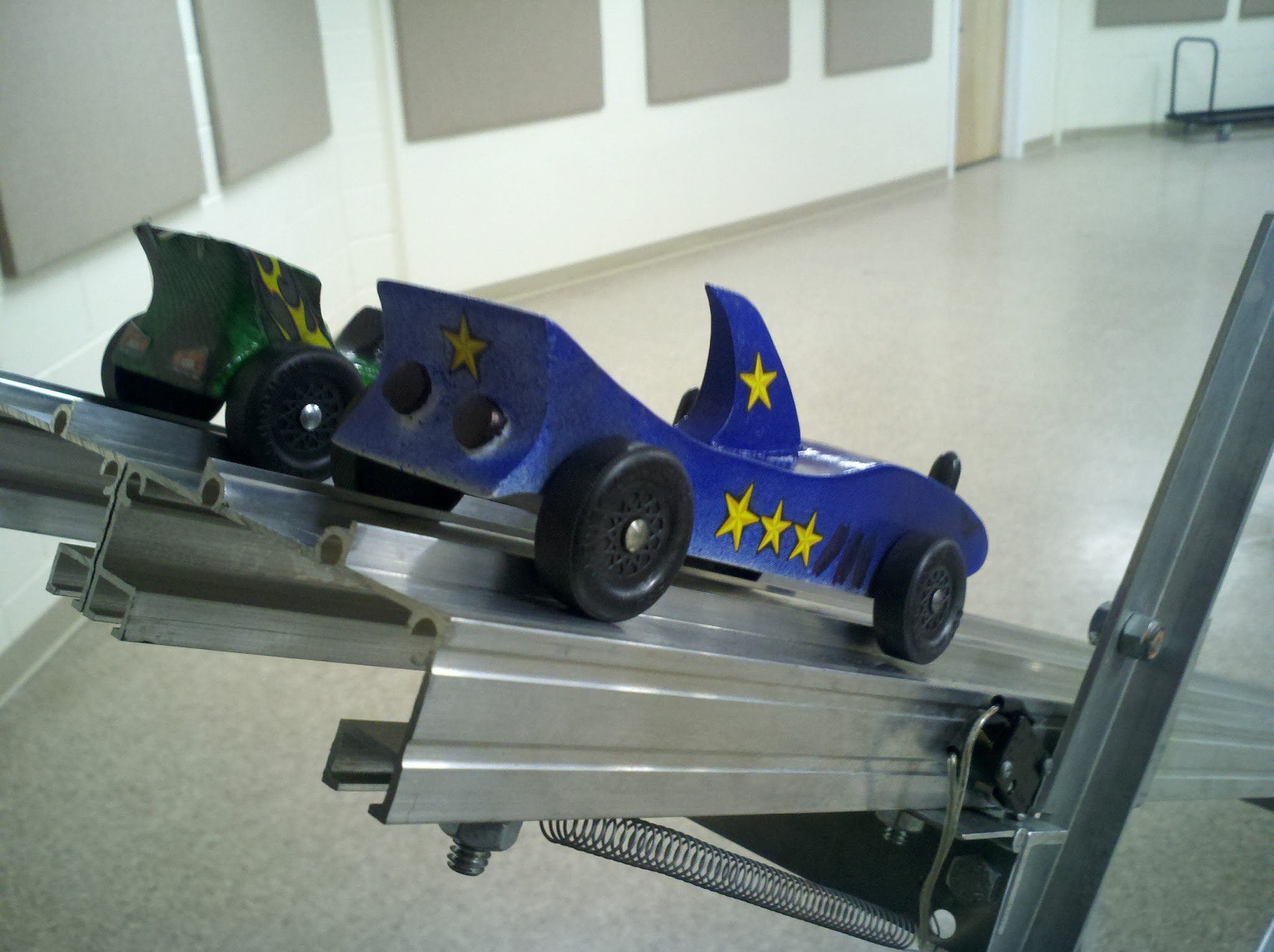
His car did reasonably well. I’m was a bit proud that when we put it on the scale at check-in it came in at exactly 5.0 ounces – the heaviest weight allowed – and ideal weight.
It was in college that I first heard Max Weber’s idea that bureaucracies grow to eventually see their own maintenance as their prime objective (Wikipedia has a section on Weberian bureaucracy http://en.wikipedia.org/wiki/Bureaucracy#Weberian_bureaucracy). At the time I assumed we were talking about governments but it didn’t take long in the nonprofit world to see the phenomenon alive there as well. Resources go to the programs that can attract the biggest donor attention. Committee discernment gets short-circuited. Internal benchmarks become the measure even if the are disconnected from actual effect or mission. If a need arises from outside of the boundaries of the internal structures, it is ignores: there’s little incentive to address it.
The only real solution is to keep remembering why we’re doing what we’re doing. It’s the practice of self-reflection, it’s the exercise of asking what we might be called to. Perhaps this is a leader’s real job description.
I’ve been thinking again lately of the way the Society of Friends responded to the Tom Fox kidnapping, a story I recounted in “Why Would a Quaker Do a Crazy Thing Like That”(https://www.quakerranter.org/2006/06/why_would_a_quaker_do_a_crazy/). I think the underwhelming response was mostly a failure of imagination. Too many of the organizations in question had settled themselves into narrowly-defined mission silos of their own making. They didn’t know what to make of the situation. I’d like to hope that a Rufus Jones or Howard Brinton would have cut through the slack, and I am encouraged at some recent conversations I’ve had with some emerging leaders, but as a student of history I know these are eternal problems that are always ready to return.
My theory of media and social change is that 90% of the time we’re talking amongst ourselves, inviting people in to the conversation and building an infrastructure of community. It’s one-on-one work, slow, people intensive (but then that’s what makes it enjoyable, right?). The fruits of this labor become visible with unexpected opportunities – those times when we’re called on by a larger public to explain ourselves or describe the world as we see it. If we’ve been doing our background work – planting the seeds that is the people of our community – then we will be ready to step up to the challenge. If we’re not, opportunity slips away.
The history of Friends – maybe the history of the church universal – is one of missed opportunities; the miracle of faith is that sometimes we connect with one another in the love that is God and lay some more bricks and mortar for God’s kingdom on Earth.
Embedded Link
What Canst Thou Say?: Vision Without vision, the people perish. Mostly because they get eaten by tigers they didn’t see coming. Isn’t that a joke from Calvin & Hobbes? I’ve been thinking a lot about vision lately.…
Another slice of lost Philadelphia profiled on HiddenCity, this time my grandmother’s childhood neighborhood.
Embedded Link
Flash of Discovery | Hidden City Philadelphia
The first English speaking Lutheran church in the world, located on Philadelphia’s Franklin Square, was part of an entire neighborhood demolished to make way for the Benjamin Franklin Bridge.